

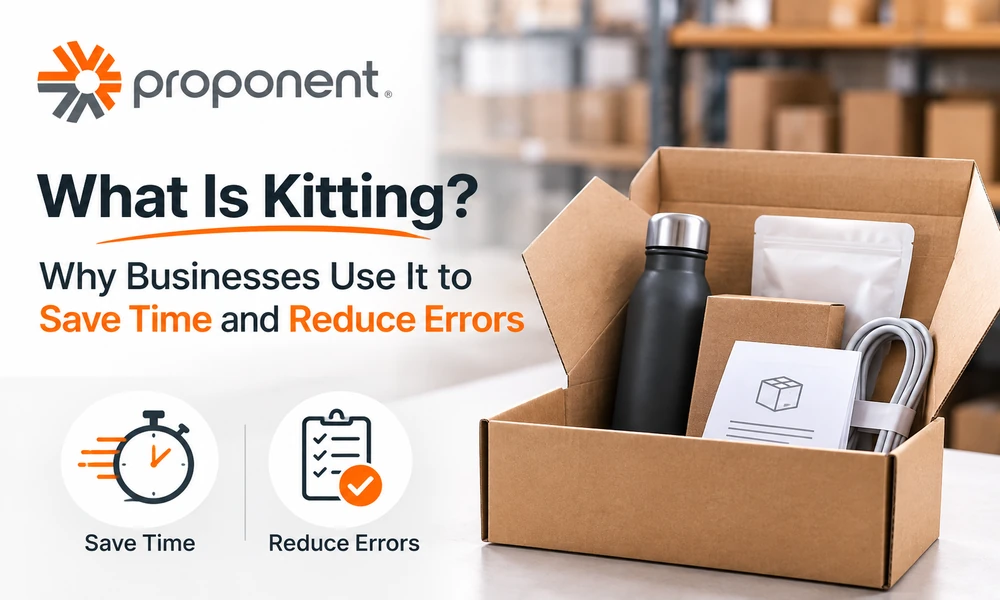
If you’re new to inventory management or warehouse operations you might be wondering, what is kitting? Kitting refers to the collection of different single items and packaging them together as one before they are used. But, instead of separately picking each product when a customer places an order, businesses have the entire kit prepared ahead of time.
This simple process helps simplify operations while empowering businesses to meet orders fast and accurately.
How Kitting Takes the Load Off Daily Operations?
Easiest way to think about the biggest benefit of what is kitting is that it simplifies the repetitive tasks. When kit makers bundle merchandise that is frequently sold together, warehouse teams spend less time on the hunt for individual pieces.
This can help businesses:
- Speed up order fulfillment
- Reduce packing mistakes
- Improve workflow
- Make inventory easier to manage
Thus, enabling the most seamless transit from your warehouse to consumer.
Common Examples of Kitting
Kitting is widely used in many industries as it adapts to various business needs.
Some everyday examples include:
- School supply packs in preparation for the new school year
- First-aid kits containing medical essentials
- Computer peripherals keyboard, mouse, and cables associated with bundles
- Set up beauty gift sets for the holiday months
- Kits for home improvement
Every kit groups products that customers often buy together.
When to Use Kitting in a Business?
Not every product is a kit ready to be sold. Kitting provides the best return on investment for businesses when an identical set of items are routinely ordered. This way, you have less to do when order steam comes blowing your way, and you ensure better order quality.
Companies must analyze customer buying behavior before identifying the products suitable for kitting.
Best Practices for Successful Kitting
Planning should go behind a well-organized kitting process. Make it a habit for businesses to verify their inventory level and provide the right items in every kit prior to shipment.
Helpful practices include:
- Using clear product labels
- Checking kit contents before packaging
- Updating inventory records immediately
- Educating staff on standardized packing procedures
Improving the performance with these steps are simple and will save you time in many future unnecessary tasks.
Challenges to Consider
Kitting offers several advantages, but it also is a complex process that has to be carefully managed in terms of inventory. Demand is quite unpredictable, so businesses may end up having to change how many kits they make if it was not met, in order to not have unsold inventory. Keeping track of inventory on a regular basis keeps it balanced, minimizes waste, as well as storage costs. Business should also be examining their kitting process from time to time and ensure that every kit is still in step with customer interests, demand trends, and what people are buying. Inventory management software helps you manage stock level limit, kit components update, and also improves the overall operational efficiency.
Why Kitting is Valuable for a Company That is Expanding
If you know about kitting, it will assist businesses to become more efficient in their operations without having any substantial modifications. Companies can save time, avoid mistakes, and improve customer experience by assembling frequently purchased items into ready-to-ship kits. If you run a warehouse, online store, or any manufacturing business, what is kitting is a realistic measure provides optimized fulfilment for faster processing and organized storage of stock.
